Crochet Hook Size Chart and Guide
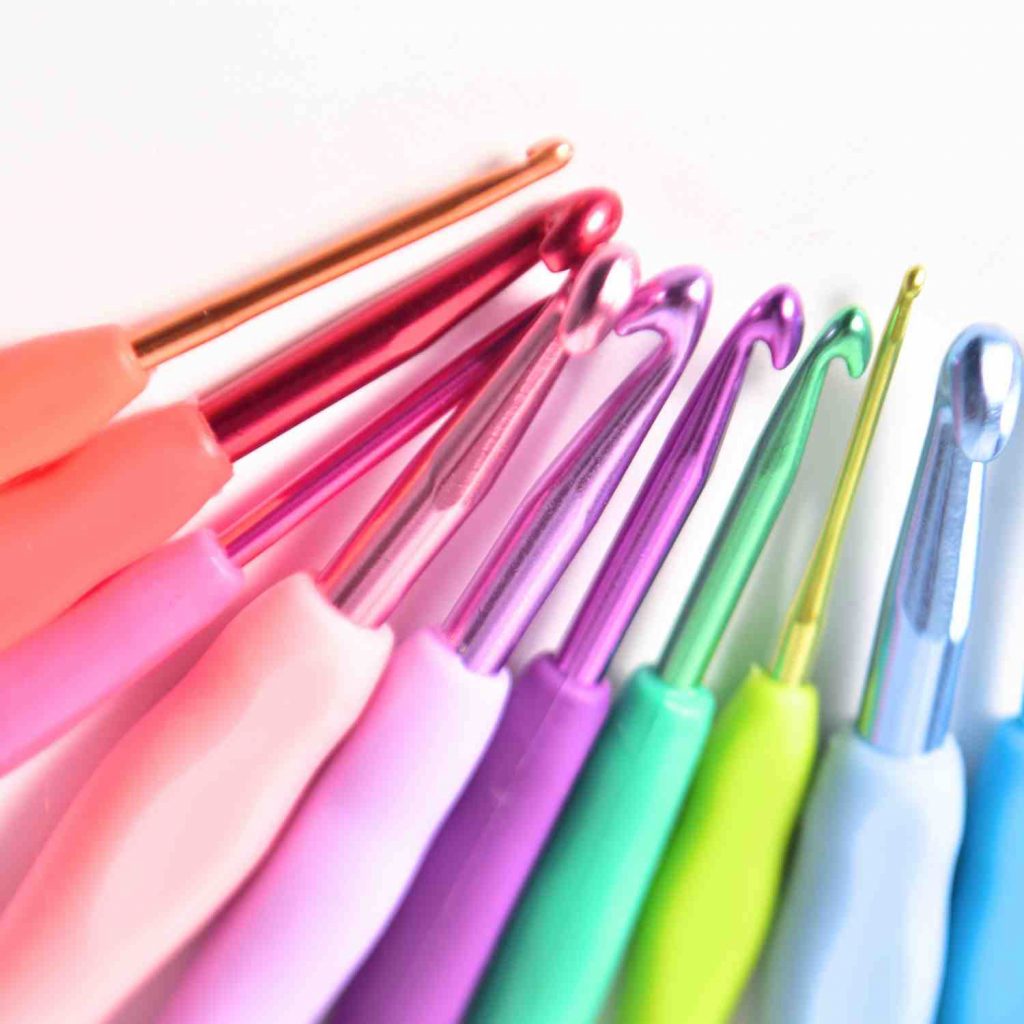
Crochet hooks come in more shapes, styles, and materials than most people realise. The right hook can make your crochet more comfortable, your stitches smoother, and your projects more enjoyable. Both my Crochet Hook Size Chart and Guide cover everything, from materials and hook styles to size conversions, so you can confidently choose the best hooks for your next crochet project.
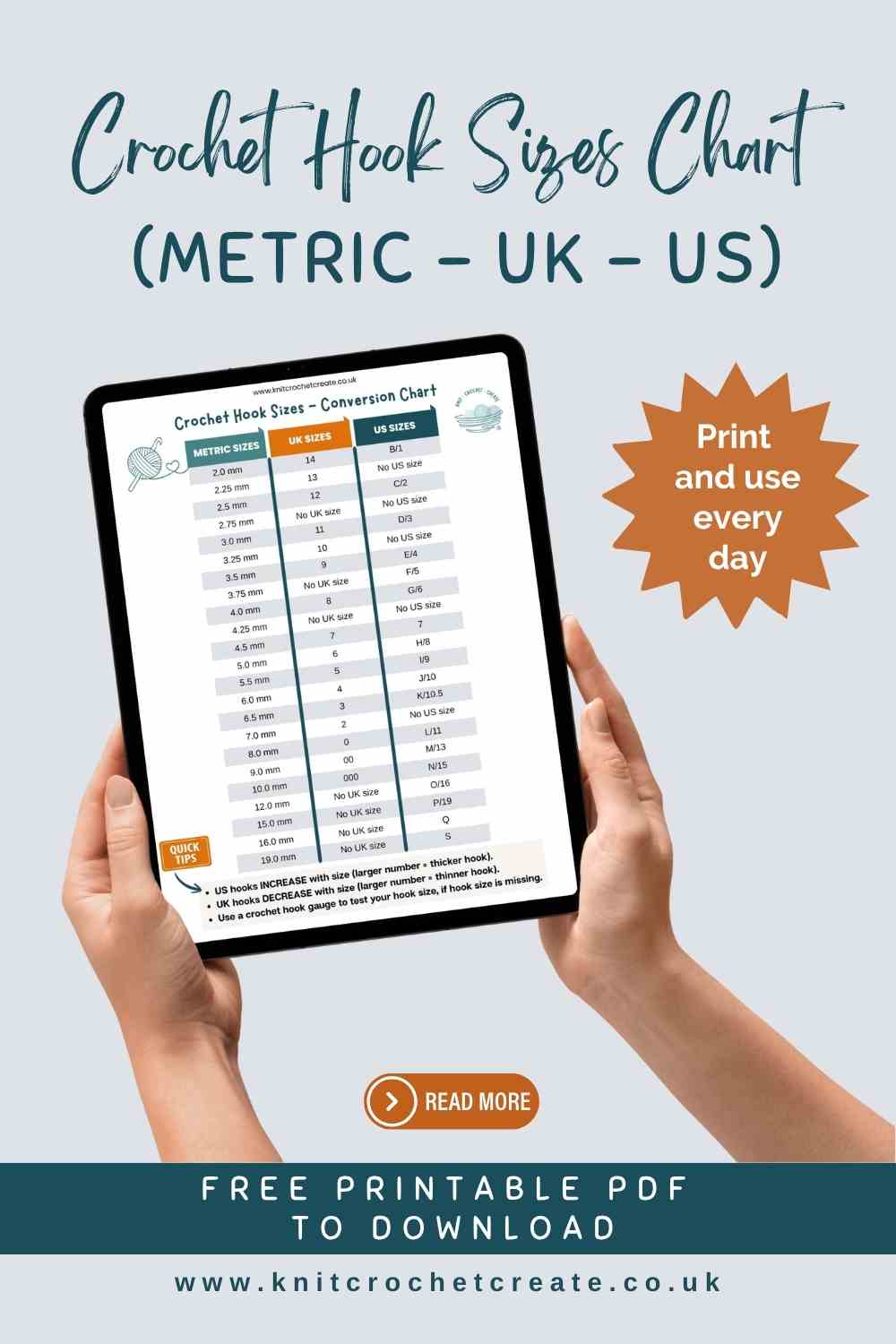
Crochet Hook Size Chart To Download
To make things even easier, I’ve included two FREE A4 PDF downloads at the end of this post:
- A complete Crochet Hook Size Chart (UK, US and metric).
- A Crochet Hook Types Guide.
You can print them, keep them in your project bag, and refer to them whenever you start something new.
🧶 Quick Look: Crochet Hook Size Chart And Guide
- Types of crochet hook: 🪝The different styles of crochet hook.
- When to use each type: 🌟 Which hooks work best for different projects.
- Pros and cons: ⚖️ The advantages and drawbacks of each style.
- Hook materials: 🌲 What crochet hooks are made from and how they feel to use.
- How hook sizes work: 📏 Understanding letters, numbers and metric sizing.
- Size conversions: 🔄 UK, US and metric size comparisons.
- Choosing the right hook: 💡 Tips to help you crochet with confidence.
Your support helps Google recognise and trust me as a knitting and crochet designer 🌟
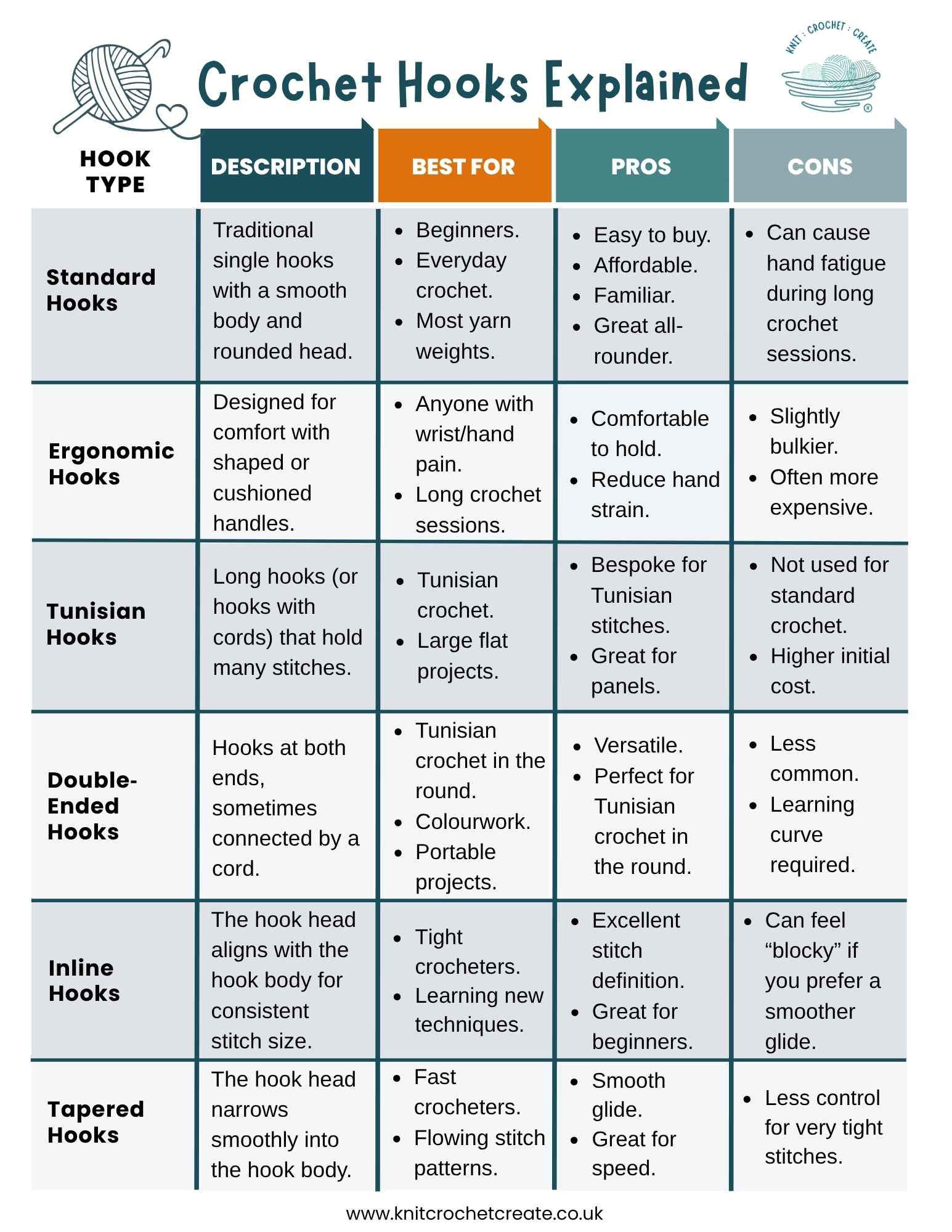
Crochet Hooks Explained
Crochet hooks come in a wide range of styles — each designed to make stitching smoother, faster or more comfortable. My quick‑reference guide below breaks down every major hook type — standard, ergonomic, Tunisian, double‑ended, inline, and tapered hooks, including clear pros, cons and best uses for each.
Whether you’re crocheting cosy blankets, amigurumi, or delicate stitches, understanding hook types helps you choose the right tool for your yarn and technique.
Use this guide as your go‑to resource for comparing hook types before starting a new project. You’ll find a printable PDF version further down in the post so you can download it, print it, and keep it handy in your project bag.
What Materials Are Crochet Hooks Made From?
Crochet hooks come in a variety of materials, and each one affects how your stitches feel, how fast you can work, and how comfortable the hook is to hold. Here’s a simple breakdown to help you choose the right one for your yarn and crochet style:
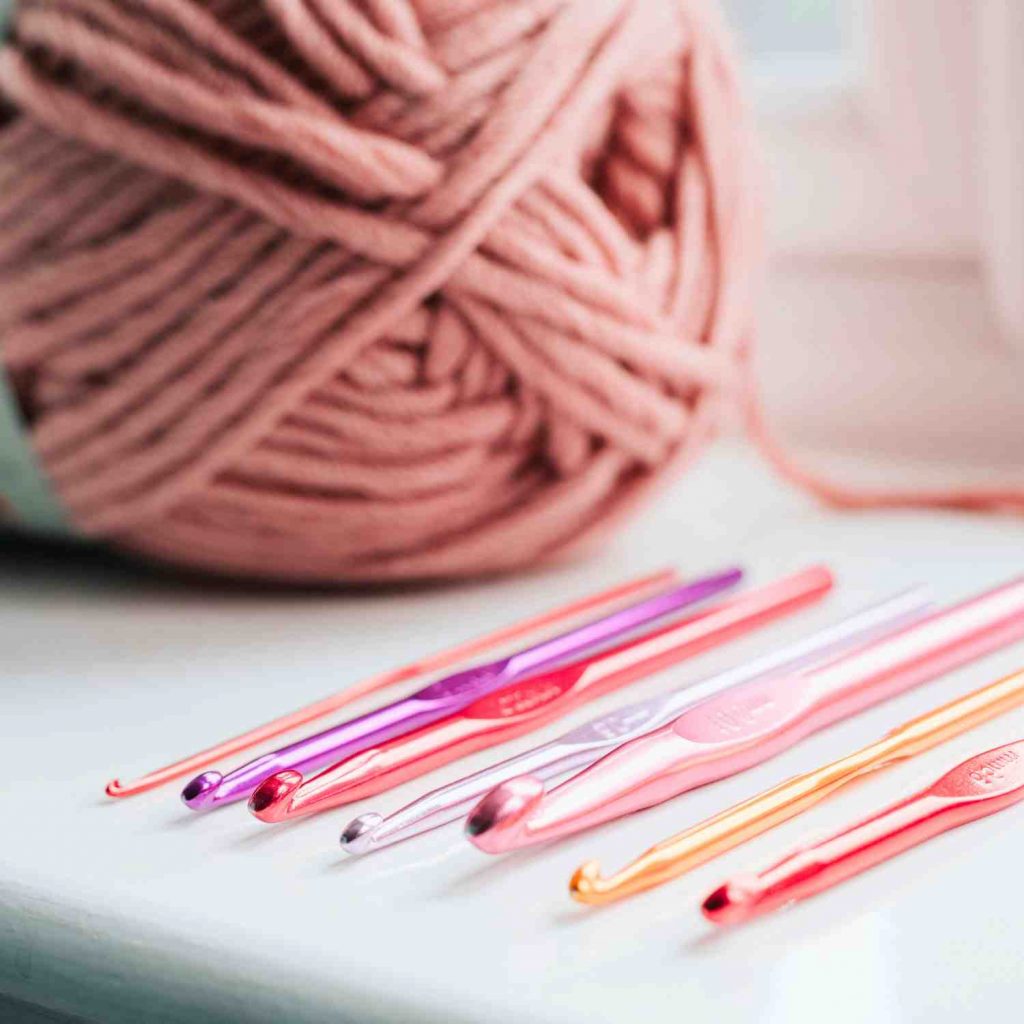
- Aluminium and metal hooks — smooth, fast and durable. Stitches glide easily, making them ideal for speed or tight crocheters. They can feel cold in the hands, which may be uncomfortable if you have joint pain.
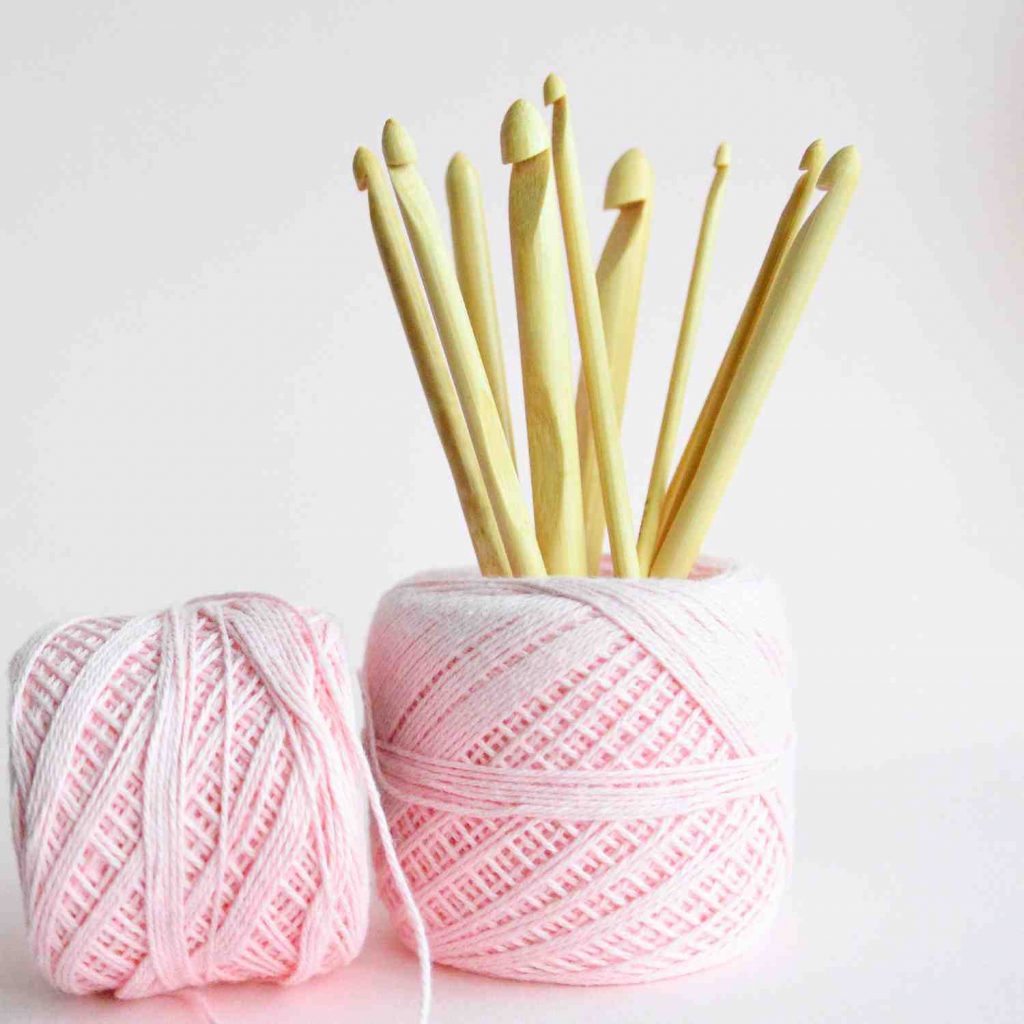
- Bamboo and wooden hooks — warm, lightweight and slightly grippy, which helps prevent stitches from slipping off. Great for beginners or for working with slippery yarns. They can bend or snap if used with very tight tension.
- Plastic hooks — affordable, lightweight and available in larger sizes. Some yarns may squeak or drag slightly, and some plastic hooks can flex while you work.
- Resin and acrylic hooks — smooth, colourful and lightweight. They offer a balance between the glide of metal and the warmth of wood.
- Steel hooks — used for fine thread crochet (like lace or doilies). Very strong, very smooth, and also perfect for tiny stitches.
▶️ Top Tip For Choosing Crochet Hooks
It’s common practise to try a few different materials before finding the hooks that feel best in your hands. Your favourite hook may even change depending on the yarn you’re using or the project you’re working on.
Why Choosing The Right Hook Size Is Important
Choosing the right crochet hook size can completely change how your project feels and flows. Understanding hook size is just as important as choosing the right hook type. The size of your hook affects how your stitches form and how your finished project looks and behaves.
Hook size affects:
- Stitch size.
- Tension/gauge.
- Fabric drape.
- Finished project size.
Larger hooks create bigger, looser stitches. Smaller hooks create tighter, more structured stitches. Always check your pattern’s recommended hook size and make a gauge swatch where appropriate, so you know your stitches match the designer’s tension and your project turns out the right size. Read more about crochet gauge (tension) here: What Is Crochet Gauge Or Crochet Tension
How to Choose the Right Crochet Hook
Choosing the right crochet hook can make a huge difference to how comfortable your project feels and how smoothly your stitches flow. If you’re not sure where to start, these simple tips will help you match your hook to your yarn, tension and project:
- Slippery yarn — choose bamboo, wood or resin hooks for extra grip and control.
- Tight crocheter — metal or aluminium hooks help stitches glide more easily.
- Loose crocheter — wood, bamboo or ergonomic hooks add gentle resistance and improve tension.
- Long projects — ergonomic handles reduce hand strain during long crochet sessions.
- Working with fine yarn or thread — steel hooks give precision and control for tiny stitches.
- Tunisian crochet — use a long hook or a corded Tunisian hook to hold more stitches comfortably.
Many crocheters switch between materials depending on the stitch pattern, fibre content or even their mood that day. The best hook is the one that feels comfortable in your hands and helps you enjoy the process.
Crochet Hook Size Chart
Crochet hook sizes can be confusing because the UK, US and metric systems all use different measurements — and older UK patterns often refer to a system that’s no longer in use. This conversion chart makes it easy to match needle sizes across all three systems so you can follow any pattern with confidence.
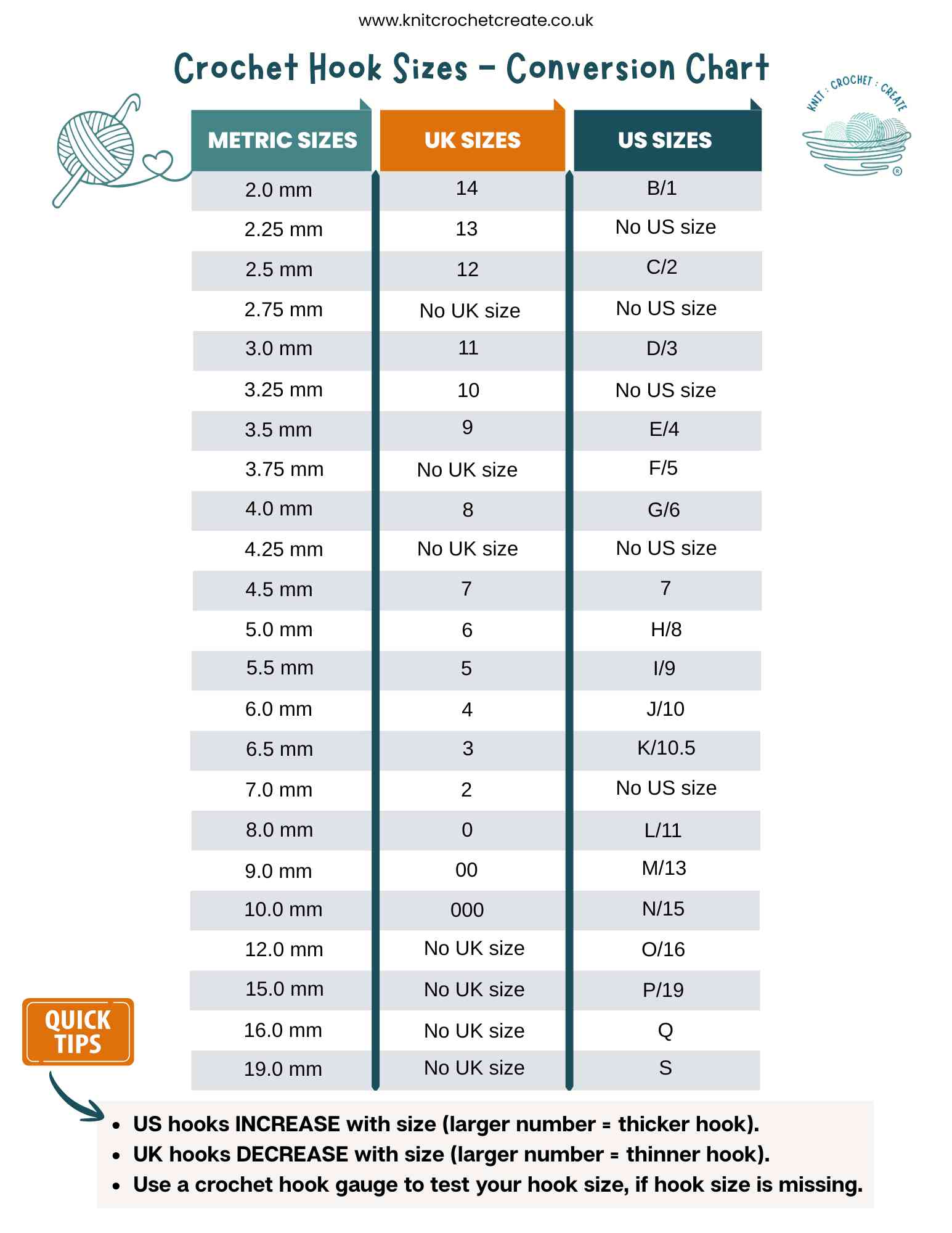
How to Get Your Free Crochet Hook Size Conversion Chart and Guide PDF
You can now download both A4 PDF guides — the Crochet Hook Sizes Chart and the Crochet Hooks Explained Guide.
Download Your Free PDFs
You can now download both A4 PDF guides — the Crochet Hook Sizes Chart and the Crochet Hooks Explained Guide.
These are the first printables in my growing Knitting & Crochet Resources Pack, a collection of handy reference sheets designed to make your crafting easier and more enjoyable. Print them, keep them in your project bag, and build your own set of go‑to knitting and crochet resources.
Frequently Asked Questions: Crochet Hook Size and Type
Neither is better. Circular needles are often more comfortable for larger projects, because the knitted fabric can sit on the cord between the needle tips. Whereas straight needles work well for smaller flat projects. It really is a personal preference as to which you choose.
Bamboo or wooden needles in 4mm or 5mm sizes are often easiest for beginners because they're comfortable to hold, lightweight and provide more grip than metal needles. Many beginners start with straight needles, although circular needles work just as well for knitting flat.
Many sock knitters use DPNs, short circular needles, or trio needles. Some also use the magic loop method on long circulars.
You may be using needles that are too smooth for your yarn. Bamboo or wooden needles provide more grip.
Using larger needles will create larger stitches and a looser fabric, while smaller needles will create tighter stitches and a denser fabric. This means your finished project may turn out larger or smaller than intended. Always check your gauge, especially when making garments, as changing needle size can affect the finished measurements. The required gauge will be included in the pattern instructions.
Conclusion
The best crochet hooks are the ones that feel comfortable in your hands and suit the project you’re making. This will vary from person to person, and that’s completely fine, because crochet is a personal craft, and we all develop our own preferences. By understanding the different types, materials and sizes, you’ll be able to choose the right hook for every project and enjoy your crochet even more.
What next?
If you loved this post then you may also enjoy more helpful posts for your knitting or crochet questions:
- How to Use Yarn Double in Knitting or Crochet
- Choosing Colour Combinations for Knitting or Crochet
- What is Gauge or Tension and how to measure it
- How to Crochet an Easy Granny Square
Share your creations!
Share your projects and tag me on Instagram [@knitcrochetcreate] because I love seeing your makes and how you bring your creative ideas to life!
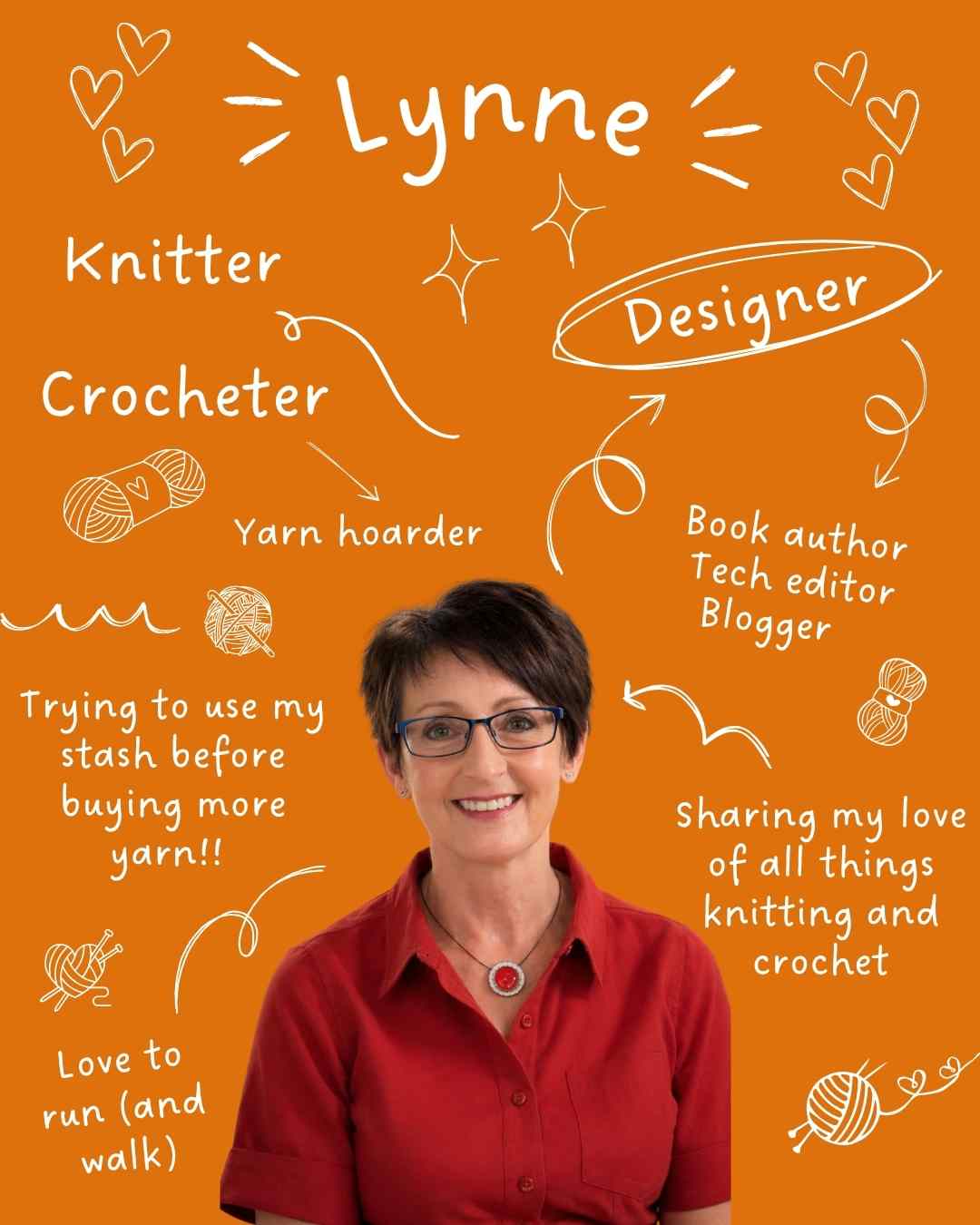
About Lynne from Knit Crochet Create
Lynne Rowe is a UK‑based knitting and crochet designer and best‑selling author, recognised for her clear, easy‑to‑follow patterns and her dedication to making knitting and crochet accessible to everyone. She is the founder of Knit Crochet Create, with a strong focus on stash‑busting projects that promote sustainable, mindful making. Lynne’s work encourages the use of your yarn stash — helping you transform small leftovers into joyful creations.
Let's keep in touch!
I'd love to chat more.
Sign up for my newsletter and receive a weekly dose of crafting inspiration, featuring the latest trends, tips, and projects to fuel your creativity.