What Is Yarn Length: Why 100g Yarn Balls Have Different Meterage
If you've ever wondered What is Yarn Length? Maybe you've looked at yarn labels, and noticed something confusing. Two balls of yarn can both weigh 100g, but one might contain 250 metres (which is 273 yards), while the other has 300 metres (which is 328 yards).
But how can the same weight of yarn have such different lengths? Using the example above, to see a 50m/55yds difference between yarn balls is quite significant. It's often a reason why knitters and crocheters run out of yarn. It happened to me recently which was very annoying.
The answer comes down to yarn thickness, fibre type, and how the yarn is made. Understanding meterage will help you plan projects, use your stash efficiently, and choose yarn wisely, and most important, avoid playing Yarn Chicken!
My post is written in English terms throughout, for metres and fibre, whereas in the US, these terms are written as meters and fiber.
What Is Yarn Length and Why Does It Matter?
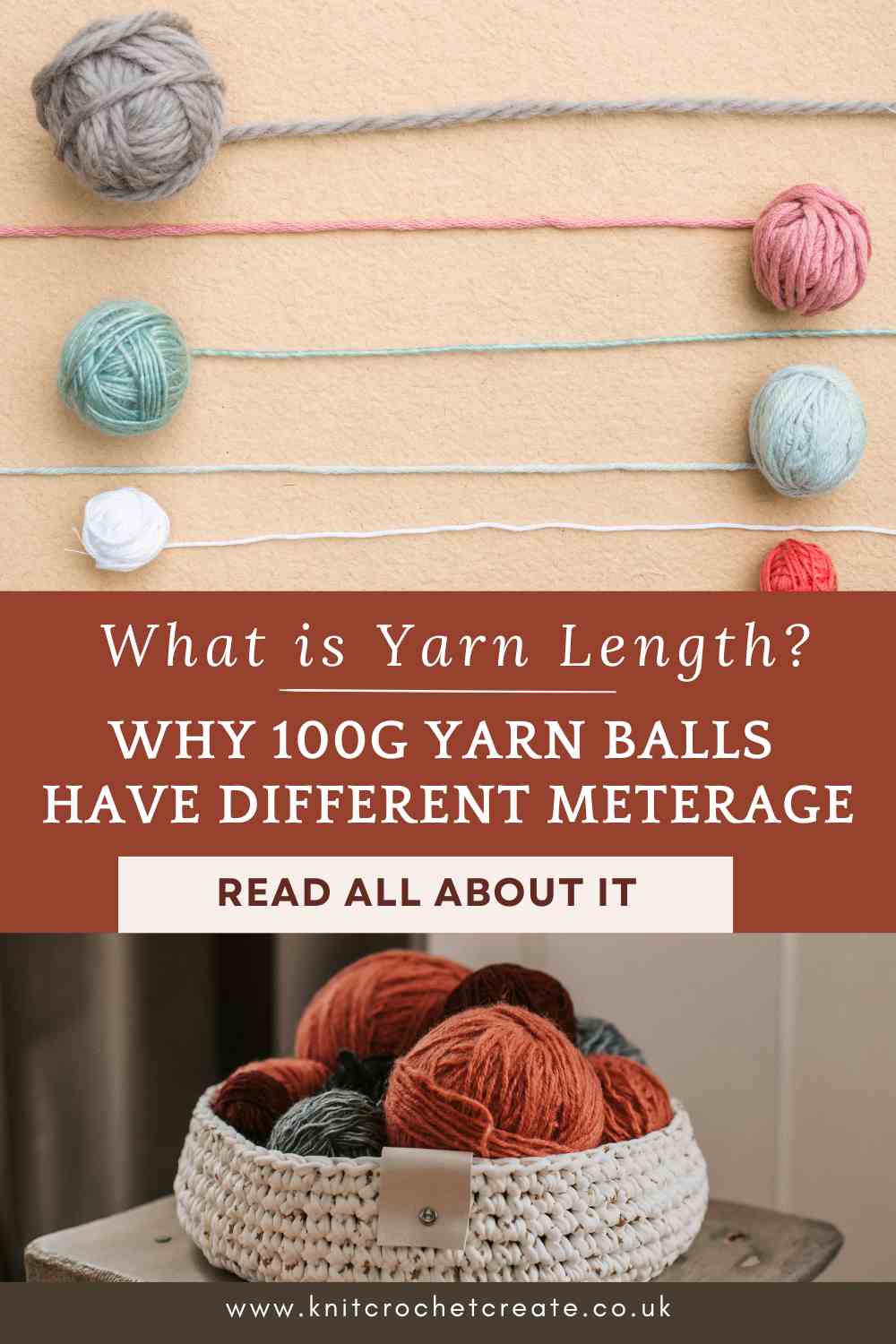
Yarn meterage is the total length of yarn in a ball or skein. You will usually see it on the yarn label like the examples below:
- 100g = 250m
- 50g = 120m
The first number is the weight of the yarn ball, whereas the second number is the actual length of yarn you get.
Yarn length or meterage tells you how much yarn you really have, which is more important than the weight when following patterns.
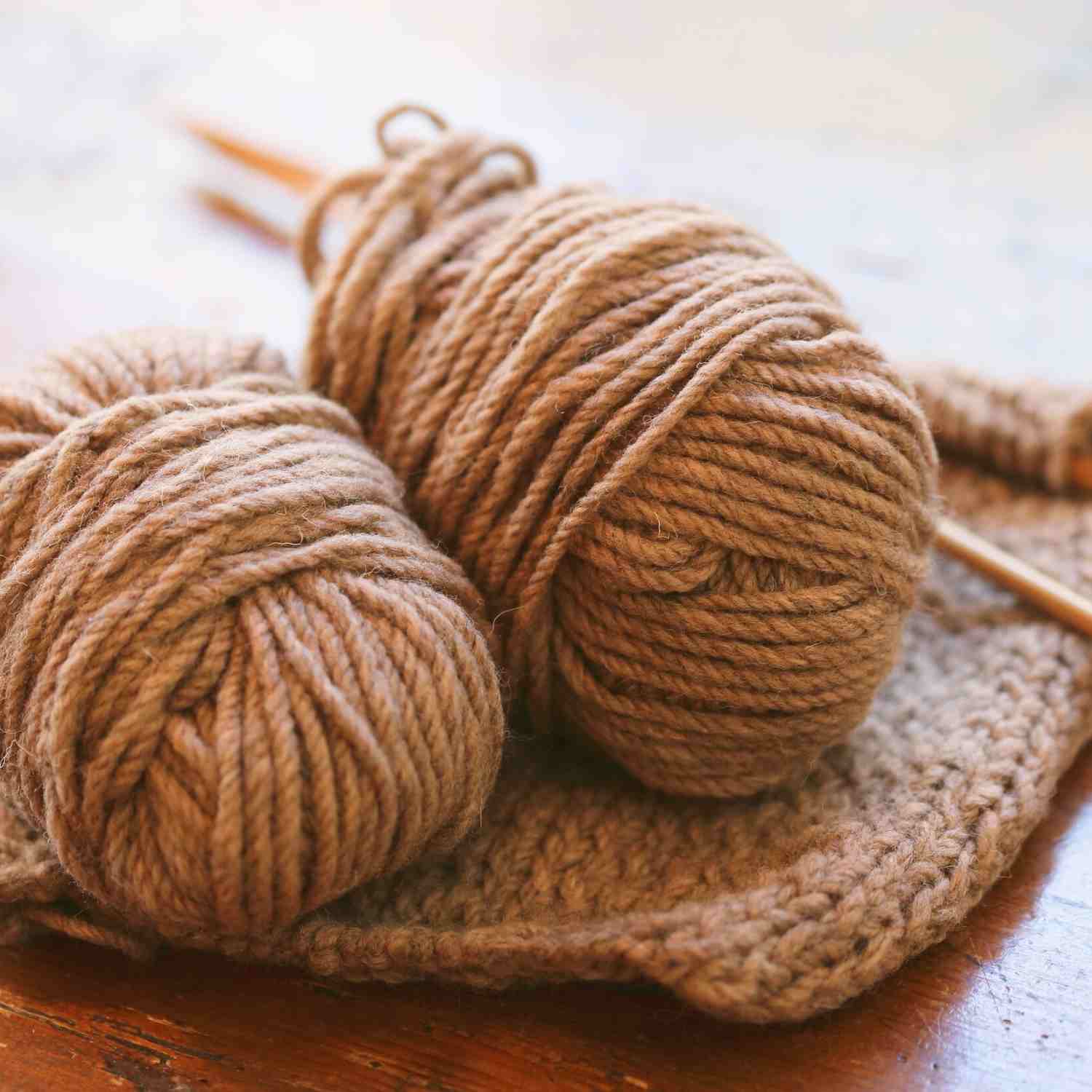
Why Yarn Balls Of The Same Weight Can Have Different Lengths of Yarn
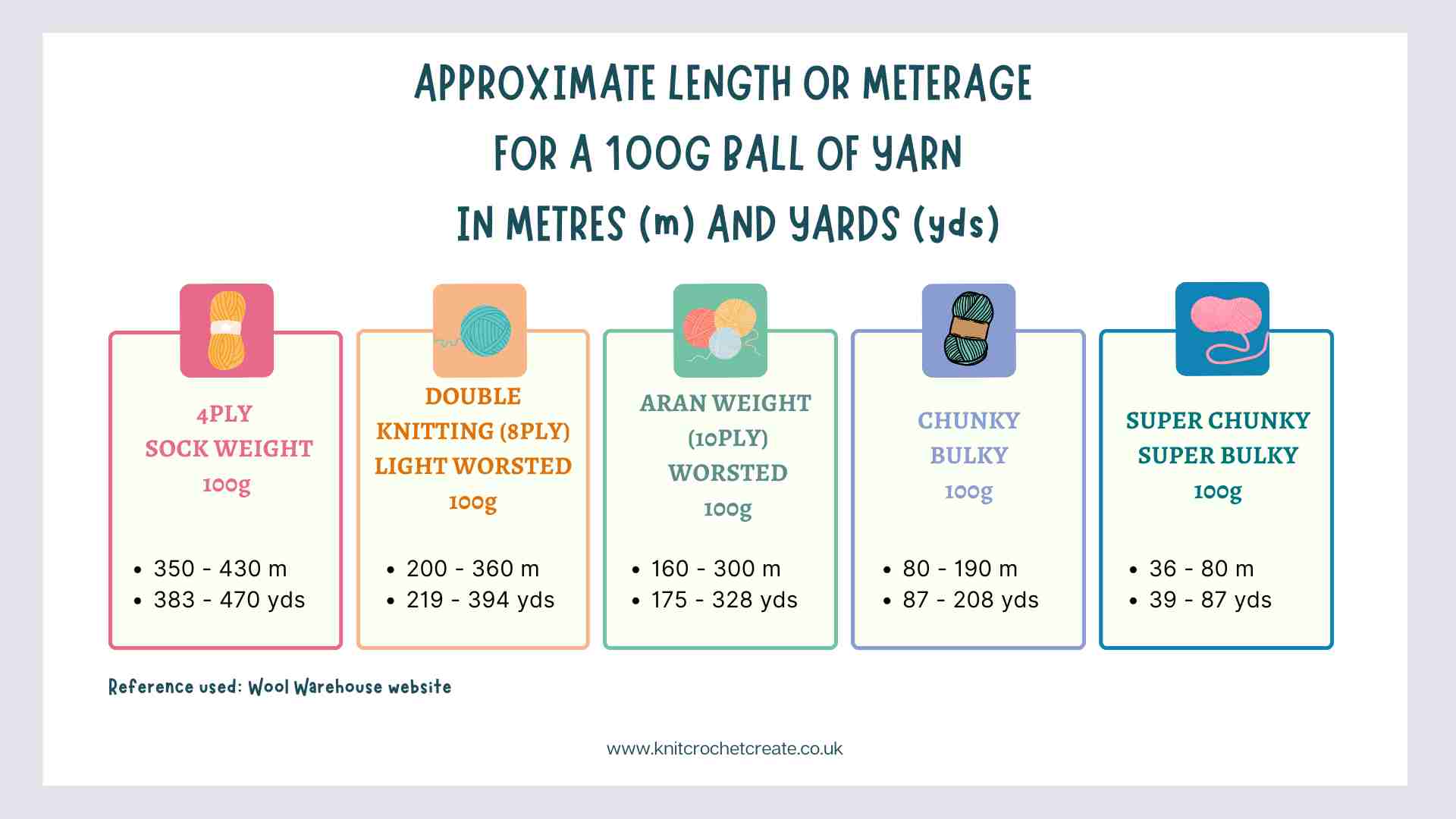
There are three main factors that affect yarn meterage:
1. Yarn Thickness
- Thicker yarn uses more fibre per metre, so the ball contains less total length.
- Finer yarn uses less fibre per metre, so you get more length in the same weight ball.
2. Fibre Type
Different fibres have different densities:
- Cotton – dense and heavy.
- Wool – lighter and springy.
- Alpaca – fluffy and airy.
- Acrylic – varies, because it depends on the spinning techniques used.
Therefore, two yarns of similar thickness can still have very different meterage, depending on fibre density.
3. How the Yarn Is Made
The way the yarn is spun affects meterage:
- Tightly spun – denser, shorter meterage.
- Loosely spun / airy – longer meterage.
- Chainette / blown yarn – may appear thick, but contain more length.
Yarn structure and ply also influence how much yarn fits in a ball.
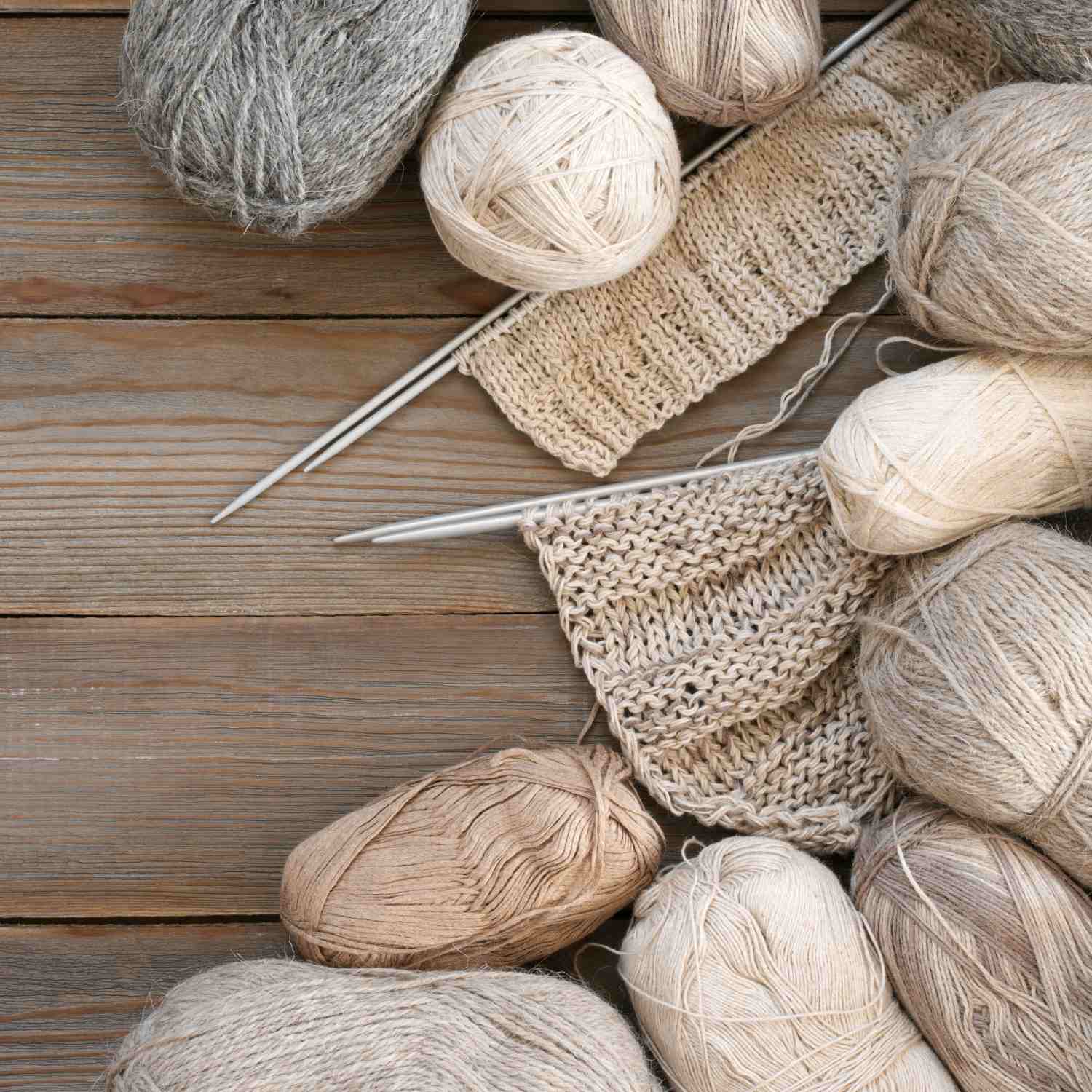
What Is Yarn Length Or Meterage - And Why It Matters For Knitters And Crocheters
When following a pattern, meterage (or yardage) is usually more important than ball weight. Patterns list yarn requirements in metres or yards because:
- Yarn brands package differently.
- Ball sizes differ.
- Fibre types vary.
TOP TIP: Checking total meterage ensures you have enough yarn before starting a project.
How to Calculate Yarn for a Pattern
Sometimes you might want to substitute a yarn in a pattern. Here’s how:
Example: Pattern states yarn requirements as: 400g of yarn, 250m/273yds per 100g.
Step 1: Calculate total metres or yards that the pattern requires:
- 400g ÷ 100g = 4 balls of yarn required.
- 4 balls × 250m/273yds = 1,000 metres/1092 yards of yarn required in total.
Step 2: Now check your own yarn’s meterage/yardage:
Example: Your yarn has 240m/262yds per 100g. Meterage required for pattern is 1,000m.
1,000m ÷ 240m ≈ 4.17 balls required → round up to 5 balls.
It works out the same if you use yardage:
1,092yds ÷ 262yds ≈ 4.17 balls required → round up to 5 balls.
Therefore, because your yarn has slightly less length per ball, you need one more ball than is stated in the pattern.
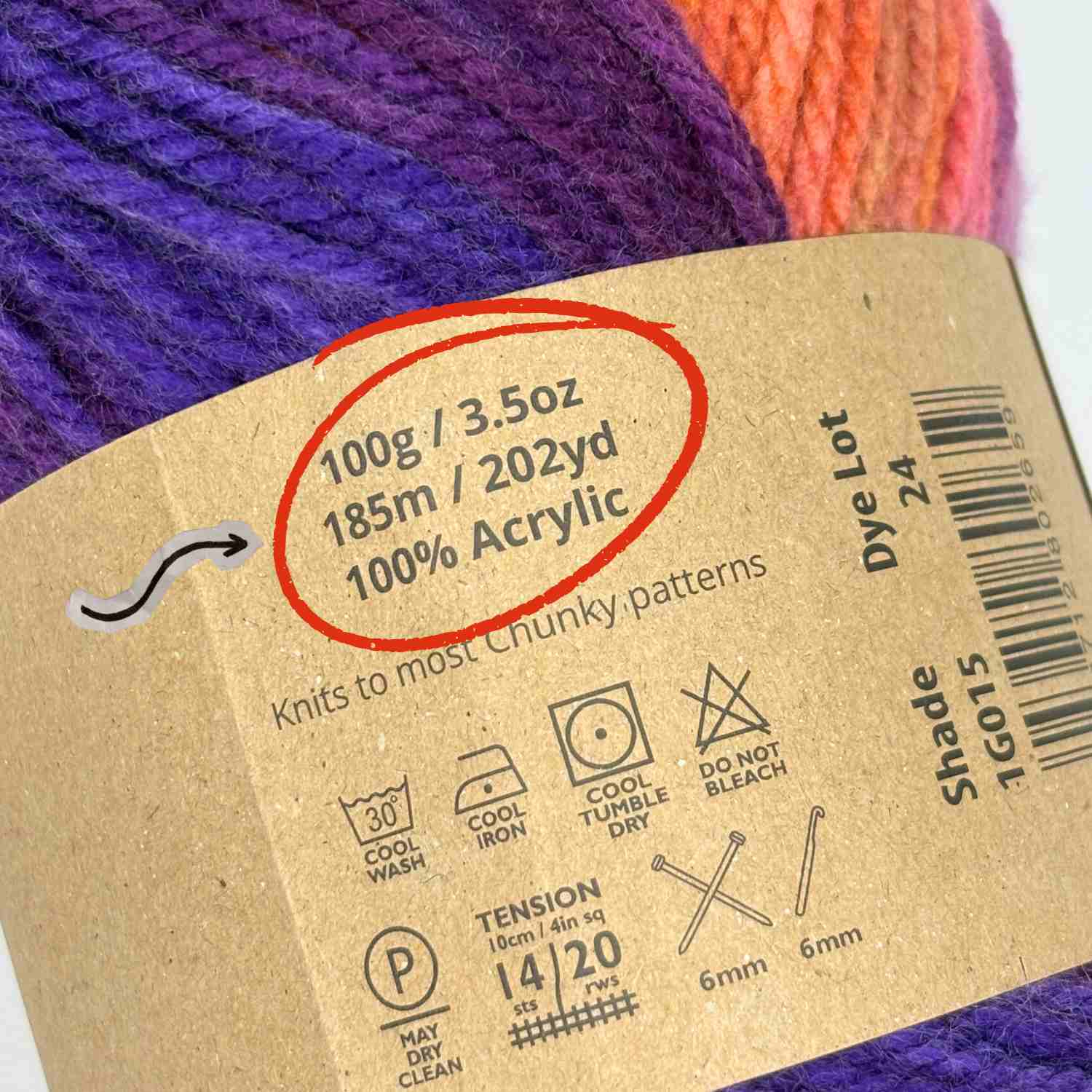
Find Yarn Length or Meterage On A Yarn Label
Most yarn labels show both weight and length, for example:
- 100g / 185m; 202 yds
- 50g / 120m; 131 yds
The first number = weight of ball
The second number = length of yarn per ball
When planning a project or substituting yarn, always check yarn length/meterage.
What is Yarn Length or Meterage: FAQs
Q: What does yarn length mean?
A: Yarn length, or meterage, is the total amount of yarn in a ball or skein. It tells you how much yarn you actually have for your project.
Q: Can I use a different yarn than the pattern recommends?
A: Yes, as long as you check total meterage and yarn weight category. Knit or crochet a swatch to check your gauge (tension).
Q: Why do two 100g yarn balls have different lengths?
A: Yarn thickness, fiber (fibre) density, and spinning method all affect meterage. Thicker or denser yarn uses more fiber (fibre) per metre.
Q: Which is more important: ball weight or meterage?
A: Meterage. It tells you how much yarn you actually have. Ball weight only tells you how heavy the ball is.
What next?
If you loved this post then you may also enjoy more helpful posts for your knitting or crochet questions:
- How to Use Yarn Double in Knitting or Crochet
- Choosing Colour Combinations for Knitting or Crochet
- What is Gauge or Tension and how to measure it
- How to Knit a Square for Beginners
Share your creations!
Share your projects and tag me on Instagram [@knitcrochetcreate] because I love seeing your makes and how you bring your creative ideas to life!
Let's keep in touch!
I'd love to chat more.
Sign up for my newsletter and receive a weekly dose of crafting inspiration, featuring the latest trends, tips, and projects to fuel your creativity.